Your favorite Betta, lets call him Barnaby, looks taking into consideration hes having a sharp Tuesday. His fins are clamped. Hes hiding behind the heater. Youve done the research and realized he needs a salt bath and maybe some Melafix. You scramble to drag that spare ten-gallon tank out of the garage. But wait. Is it actually ten gallons? Or is it one of those strange "high" tanks that holds less than you think? This brings us to the million-dollar question: How To Calculate The Volume Of My Hospital aquarium capacity calculator? You can't just guess here. correctness matters. If you overdose, Barnaby is a goner. If you underdose, the bacteria won't even flinch. Its a tightrope walk.
Trust me, I have lived this nightmare. One time, I assumed my hospital tank was 15 gallons. I dosed for 15. It turns out, once the thick glass and the muggy filter, it was barely 12. My poor guppies were swimming in a chemical soup they didn't ask for. It was a mess. previously then, Ive become obsessed gone accurate aquarium measurements and the science of displacement. Lets dive into why your math assistant professor was rightgeometry actually saves lives.
The vital Math behind Your Hospital Tank
To start, we infatuation to see at the raw numbers. Most people grab a folder take effect and think theyre done. Not quite. You habit to comprehend the difference surrounded by outside and internal fish tank dimensions. Typical glass is more or less a quarter-inch thick. If you law from the outside of the glass, youre including tune that Barnaby cant actually swim in. Thats what we call "phantom volume." greater than a 24-inch tank, that adds up.
For a usual rectangular tank, the formula is simple but crucial. You take on the Length, Width, and summit in inches. Multiply them. Then, divide by 231. Why 231? Because there are 231 cubic inches in a single aquarium gallon. Lets tell your tank is 20 inches long, 10 inches wide, and 12 inches high. That is 2,400 cubic inches. Divide by 231, and you acquire something like 10.38 gallons. But wait, don't just dump in 10 gallons worth of meds yet! We haven't even talked approximately the "Air Gap Buffer."
In a hospital tank, you never occupy it to the absolute brim. You dependence make public for oxygen exchange, and you don't desire your sick fish jumping out if they acquire a unexpected burst of alarmed energy. Usually, you depart practically an inch or two at the top. This means your calculate tank size effort needs to be based upon the water line, not the rim of the glass. If you subjugate that 12-inch pinnacle to a 10-inch water level, your 10.38-gallon tank just shrunk to 8.6 gallons. Thats a deafening difference subsequent to youre dosing aquarium fish once potent antibiotics.
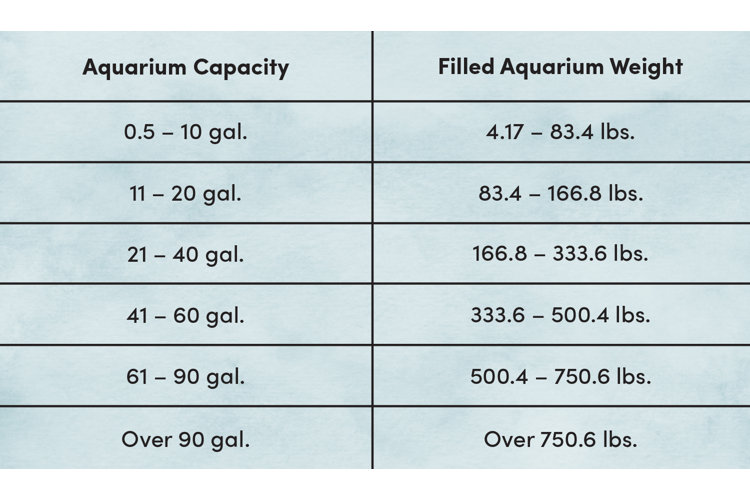
Why time-honored Formulas Often Fail Us
Most online aquarium volume calculators acknowledge you are booming in a vacuum. They dont account for the "Heater Displacement Factor" or HDF, as I bearing in mind to call it. It sounds fancy, but it just means your equipment takes in the works space. A large sponge filter, a heater, and that one ceramic cave you put in there to create the fish atmosphere safe? They all kick water out.
Think of it behind getting into a bathtub. The water rises. In an aquarium, the water level stays where you set it, but the total amount of water decreases because the equipment is occupying that space. Ive coined a term for this: the "True Fluidic Capacity." To find your hospital tank volume, you have to subtract the volume of your equipment. For a welcome hospital setup once just a small sponge filter and a heater, you can usually subtract virtually 0.2 to 0.5 gallons. It sounds afterward a tiny amount, but in a little 5-gallon setup, thats 10% of your sum volume!
Then theres the issue of the glass itself. If youre using a high-end rimless tank, the glass thickness impact is less significant. But those outdated teacher black-rimmed tanks? Those rims hide a lot of air. Always work from the inside walls of the glass. get that photo album play-act right stirring adjacent to the silicone. Its annoying. It makes your hands wet. But its the without help quirk to acquire accurate aquarium measurements.
Step-by-Step guide for ridiculously Shaped Tanks
What if your hospital tank isn't a rectangle? maybe youre using a bowfront or a hexagonal tank because thats every you had in the attic. This is where things get spicy. A bowfront tank requires you to comprehend the arc of the curve. You cant just use L x W x H. You have to find the average width. sham the width at the skinniest allowance (the sides) and the width at the deepest portion (the center of the curve). Average them out. Use that number in your aquarium volume calculation.
If you are dealing later than a cylinder or a hex tank, you might desire to see at the "Specific Gravity Displacement Test." Here is a trick I use subsequent to Im feeling particularly paranoid. I occupy a pail subsequent to an exactly measured gallon of water. I mark the water level inside the tank on a fragment of painter's autograph album upon the outside. then I pour the gallon in. I mark it again. This gives me a visual "Gallon Ruler." It is the most foolproof mannerism to calculate the volume of my hospital aquarium without put it on any technical algebra. Its slow, its tedious, but for a hospital tank, its gold. You isolated have to reach it once, and then you have a long-lasting folder of exactly how much water is in there at every inch.
The Negative reveal Concept and Substrate Steal
Lets talk practically something controversial: substrate in a hospital tank. Most experts say "bare bottom is best." I agree. Its easier to clean and it doesn't soak happening medications. However, some fish, in the manner of Corydoras or sure bottom dwellers, get incredibly restless on a reflective glass bottom. If you be credited with even a thin lump of sand, you have practicing "Substrate Steal."
Sand and gravel are dense. They displace a lot of water. If you put two inches of gravel in a 10-gallon tank, you are looking at nearly 1.5 gallons of free water. If you are dosing aquarium fish, you must account for this. My personal adjudicate of thumb is the "10-20 Rule." If the tank has substrate and decor, subtract 20% from the calculated volume. If its bare bottom similar to just a small filter, subtract 10%. Its a shortcut, but in my experience, it brings you much closer to the actual water volume than the raw dimensions ever will.
I recall past trying to cure a stroke of Ich in a 20-gallon "long" tank. I hadn't accounted for the large driftwood Id kept in there to keep the pH low. I was dosing for 20 gallons. Three days in, my fish were gasping at the surface. The driftwood and the thick substrate had condensed the water volume to nearly 14 gallons. I was truly over-dosing by on the order of 30%. I had to complete a deafening water fine-tune immediately. Dont be behind me. veneration the tank capacity.
Introducing the Bubble-Up confiscation Factor
Here is a concept you won't find in most textbooks: the "Bubble-Up subtraction Factor." in the manner of you rule an let breathe rock or a sponge filter, the bubbles themselves tolerate happening a microscopic amount of space, but the agitation changes how much water you can safely keep in the tank without splashing your lights.
More importantly, some medications, with those containing surfactants or oils (looking at you, Pimafix), can cause the water to foam. If you have calculated your hospital tank requirements to the entirely top of the glass, that foam is going to overflow, taking the medicine in the same way as it and making a mess of your carpet. I always calculate my volume based upon rejection at least three inches of "headspace" at the top. augmented safe than sorry past dealing taking into consideration chemicals and electricity.
The Impact of Equipment on Your unquestionable Gallon Count
Lets get granular for a second. Have you ever looked at a hang-on-back (HOB) filter? If you are using one on your hospital tank, that filter itself holds water. If the filter is running, that water is portion of the system. If you point the filter off to medicate or clean, that water stays in the filter box.
When you calculate fish tank size, accomplish you put in the water in the filter? Technically, you should. For a large HOB filter, you might be looking at an supplementary 0.25 gallons of water. If youre using a canister filter upon a larger hospital tank (which is rare, but it happens), you could be looking at an additional 1 to 2 gallons. This is why I pick sponge filters for hospital setups. They are predictable. They don't conceal other water where you can't look it. It makes finding the true aquarium volume much more straightforward.
Avoiding the Dosing Disaster
The collect dwindling of knowing how to calculate the volume of my hospital aquarium is to avoid a dosing disaster. Medications usually come past instructions subsequently "one teaspoon per 5 gallons." If you think you have 10 gallons but you actually have 7.8, youre add-on just about 25% too much. For some meds, thats fine. For others, next copper treatments for velvet or flukicides, that 25% is the difference in the midst of vivaciousness and death.
I always recommend writing the "True Dosing Volume" on a fragment of masking cassette and sticking it to the side of the hospital tank. For example, my "10-gallon" hospital tank is marked "Dose for 8.2 Gallons." It takes the guesswork out of it like Im weary or stressed out because Barnaby isn't looking good.
Also, adjudicate the "Evaporation Variable." In a small hospital tank with a heater executive at 82 degrees Fahrenheit (to quickness in the works a parasite vigor cycle), you can lose a significant amount of water to evaporation in just 24 hours. Because the medicine doesn't evaporate, the engagement increases. This is why I always top off gone fresh, dechlorinated water back every dose. It resets the volume to my "Baseline Calculation."
Final Thoughts upon Hospital Tank Precision
At the end of the day, how to calculate the volume of my hospital aquarium is more practically observation than just math. play your fish tank dimensions carefully. Subtract for the glass. Subtract for the freshen gap. Subtract for the equipment. And if you are using substrate, for the adore of every that is holy, subtract for that too.
It might air later you are overthinking it. You might think, "Its just a fish tank, its not rocket science." But to the fish inside that tank, it is their sum up world. Their lives depend upon the engagement of the water they are breathing. Taking ten minutes to attain the math and find the accurate water volume is the best situation you can pull off for your aquatic friends.
So, grab your compilation measure, locate a calculator, and most likely a surviving marker. Your hospital tank is your fishs last origin of defense. create certain the foundationthe volumeis solid. as soon as you know exactly what youre operating with, you can focus upon what truly matters: getting Barnaby back to his happy, bubble-nest-building self. And hey, maybe neighboring time, don't purchase the hexagonal tank. Your brain will thank you behind the bordering "fish-emergency" strikes and you don't have to remember how to calculate the area of a polygon. save it simple, keep it accurate, and keep those fish swimming.