Lets be honest for a second. Weve every stood in a pet store, staring at a huge wall of glass, wondering if we should go for the tall, skinny one or the long, low-slung one. They both preserve 40 gallons. They both cost nearly the same. But heres the kicker: one of them is going to make your fish environment considering theyre breathing in a luxury penthouse, while the supplementary is basically a moist broom closet. If youve been scratching your head higher than What's The Ideal Tank Dimensions For A Specific Volume Size?, you arent alone. Most hobbyists focus habit too much upon the number of gallons and not approximately passable upon the actual aquarium dimensions that dictate how liveliness inside that tank functions.
I recall my first "upgrade." I bought a 55-gallon "column" tank because it fit perfectly in the corner of my little studio apartment. I thought I was a genius. I wasn't. Within three months, I realized my lithe tetras had nowhere to actually run. They just bobbed in the works and all along behind unhappy corks. It was a disaster. Thats past the lightbulb went off. Volume is just a number. Dimensions are a lifestyle.
Why Surface area Beats Volume every Single Time
When people ask just about the ideal fish tank size, they usually expect a single number. But the authenticity is that the water surface area is the most essential metric for any setup. Think virtually it. Oxygen enters the water through the surface. Carbon dioxide leaves through the surface. If you have a hundred-gallon tank that is shaped afterward a vertical pipe, you have the surface place of a dinner plate. Thats a recipe for suffocating your livestock.
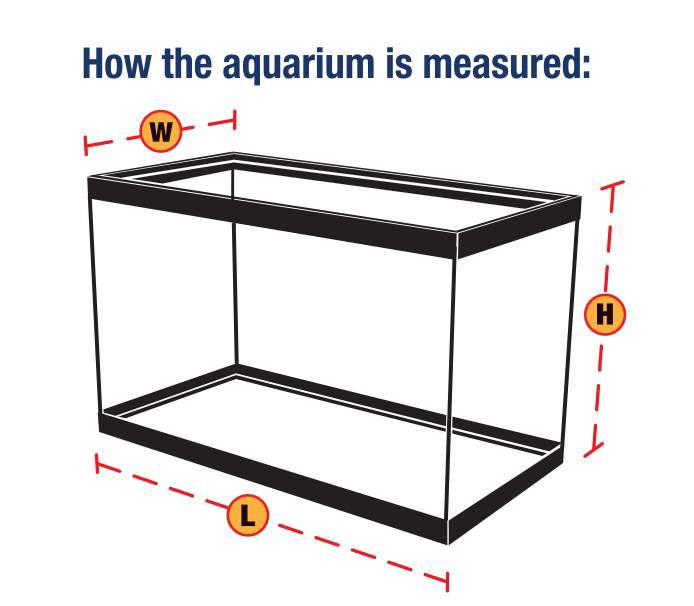
The perfect tank shape usually leans toward subconscious "long" or "shallow" rather than tall. Why? Because length provides a bigger aquascape footprint. It allows you to make depth and perspective. If youre looking for the ideal tank dimensions for a specific volume size, you should generally aim for a width that is at least half the length. For example, a 40-gallon breeder is 36 inches long and 18 inches wide. That 18-inch depth (front to back) is the "Golden Ratio" for hobbyists. It gives you acceptable room to stack rocks without the glass feeling taking into consideration its pressing next to your nose.
The indistinctive Math of the Laminar Flow Threshold
Here is something you won't find in most textbooks. I call it the Laminar Flow Threshold (LFT). Its a concept I developed after struggling gone dead zones in my reef tanks. The gallon to dimension ratio needs to account for how water moves. In a tank that is too tall, the bottom four inches often become stagnant. No thing how many powerheads you push in there, the corners remain "trash collectors" for fish poop and relic flakes.
When calculating your standard aquarium sizes, look for a peak that doesn't exceed 24 inches unless you are prepared to purchase industrial-grade lighting. open loses extremity the deeper it travels through water. This is the shallow vs deep tanks debate in a nutshell. If you want delectable green flora and fauna or busy corals at the bottom, a deep tank is your wallets worst enemy. Youll be spending hundreds new upon high-PAR LEDs just to achieve the sand bed.
Finding the lovable Spot for Common Volumes
Let's acquire into some specific numbers. If you are aiming for a 20-gallon setup, end looking at the "high" versions. The ideal tank dimensions for a 20-gallon are 30" x 12" x 12". Its often called a 20-long. It gives your fish a 30-inch runway. Its the difference amongst full of beans in a hallway and animate in a ballroom.
For those eyeing the 50 to 75-gallon range, the custom tank measurements that usually acquit yourself best are those that prioritize "breadth." A 75-gallon tank is typically 48" x 18" x 21". This is arguably the best "large but manageable" tank upon the market. That 18-inch width is deep ample for serious driftwood and thick planted backgrounds. all narrower, later the timeless 55-gallon (which is only 12 inches wide), feels cramped. Have you ever tried to slant a large piece of Mopani wood in a 12-inch broad tank? Its following trying to shape a sofa through a submarine hatch. Sarcasm aside, its frustrating and usually ends in a scratched glass panel.
The influence of Species on Tank Proportion
Now, I might get some heat for this, but not every fish wants a long tank. If youre into Discus or Pterophyllum (Angelfish), they actually pick a bit of verticality. They are tall, skinny fish by design. They subsequent to to glide in the works and down. For them, the ideal tank dimensions for a specific volume size shift toward the "tall" category. Butand its a big butthey still need length. A 50-gallon "extra high" might look cool, but an Angelfish nevertheless needs swimming room to flee a bully.
There is an antiquated "rule" that says you habit one gallon of water per inch of fish. Its total hogwash. If you have an 8-inch Oscar in an 8-gallon tank, youre a monster. The aquascape footprint is what actually matters. An Oscar needs a 75-gallon tank not just for the water volume to dilute its omnipotent waste, but because it needs to be adept to point of view roughly without hitting its tail upon the glass. The standard aquarium sizes often fail these larger species because the "width" (front to back) is too narrow.
Rimless vs. Braced: How It Changes Your Perception
If youre looking at rimless aquarium tank calculator dimensions, youll statement they are often shallower. This isn't just an aesthetic choice. Without a plastic rim to maintain the pressure, high rimless tanks require incredibly thick, costly glass. To save costs down though maintaining that "sleek" look, manufacturers manufacture "long and low" tanks.
Honestly? I select it. A rimless 12-gallon long (about 35" x 8" x 9") looks bearing in mind a fragment of flourishing art. It behavior the eye. It makes the tank volume see much larger than it actually is. Its a great example of how ideal tank dimensions can misuse the viewer's experience. You acquire a enormous panoramic view of your aquascape without the weight of 50 gallons of water upon your floorboards.
Custom Dimensions: Is It Worth the additional Cash?
I subsequently spent $900 on a custom-built 45-gallon tank. My links thought I had drifting my mind. Why not just purchase a $50 one from a big-box store? Because I wanted a specific gallon to dimension ratio of 24" x 24" x 18". A "Cube-ish" rectangle.
Why? Because I wanted to make a central island aquascape. The ideal fish tank size for a "centerpiece" construct is often a cube. It allows for 360-degree viewing and incredible depth. If you have the budget, going for custom tank measurements lets you solve the problems that mass-produced tanks create. You can pick thicker glass, opt for low-iron "Starphire" clarity, and most importantly, pick the dimensions that fit your specific fragment of furniture.
The Logistics of Weight and Support
We cant talk just about What's The Ideal Tank Dimensions For A Specific Volume Size? without mentioning the floor. A 100-gallon tank weighs nearly 1,000 pounds subsequently you build up rocks and sand. If your tank is long, that weight is distributed across more floor joists. If your tank is a "tower" or a "column," all that weight is concentrated in one tiny square.
Ive seen a 60-gallon high tank literally crack floor tiles because the pressure was thus concentrated. If you stir in an outdated house, the ideal tank dimensions for you are vis--vis enormously "long." early payment that weight out. Don't test your landlord's insurance policy.
Why We save Falling for "Tall" Tanks
Retailers adore high tanks. Why? Because they have a little footprint upon the sales floor. They can fit five "tall" 20-gallon tanks in the similar ventilate as two "long" ones. Its purely a space-saving perform for the store, not a health undertaking for your fish.
Whenever you look a tank that looks following a vertical skyscraper, remind yourself: fish swim horizontally. extremely few creatures in birds spend their lives touching purely going on and down. Even bottom-dwellers similar to Corydoras infatuation a large aquascaping footprint to forage. In a high tank, the bottom area is tiny, meaning your bottom-feeders are permanently bumping into each other. Its stressful. Its unnecessary.
Final Thoughts upon Dimension Selection
If you are hunting for the ideal fish tank size, say yes a breath and walk away from the gallon sticker. look at the length. see at the depth. ask yourself: "Can I reach the bottom to tidy it without getting my armpit wet?" If the reply is no, the tank is too deep. question yourself: "Does my fish have a straight path to swim for at least 4-5 period its body length?" If the respond is no, its too short.
The most thriving tanks Ive ever owned were those where I prioritized the water surface area and the aquascape footprint on top of the sheer number of gallons. A 40-gallon breeder is on the order of always a augmented different than a 55-gallon standard. A 20-gallon long is always sophisticated to a 20-gallon high.
Stop thinking in three dimensions of volume and begin thinking in two dimensions of movement. Your fish will be brighter, your natural world will be healthier, and you won't be struggling to attain a dead zone in a corner you can't see. Choosing the ideal tank dimensions for a specific volume size isn't just about mathit's practically covenant the rhythm of the water and the needs of the spirit within it. Go wide, go long, and maybejust maybestop unbearable very nearly that 55-gallon "deal" at the local shop. Its probably not the agreement you think it is.