I have spent the last fifteen years of my computer graphics surrounded by glass boxes and the constant hum of expose pumps. My carpet has seen more spilled conditioned water than actual vacuuming. I call myself an expert, but lets be honest. Even the pros mess taking place the math. A few months ago, I nearly wiped out a colony of rare Caridina shrimp because I miscalculated a dosage. I was using a generic website that motivated me to convert my centimeters to inches first. It was a nightmare. I realized after that that I needed a change. I arranged to go upon a hunt for the ultimate tool. I wanted something built for the on fire of us. The ones who don't think in gallons or "cups." I wanted the best. So, I tested the best aquarium calculator for metric measurements to look if it could actually keep my tanks and my sanity.
The frustrating World of Unit Conversions
Every mature I go online to research aquarium water chemistry parameters, I hit a wall. Most of the global action is dominated by North American measurements. It is incredibly annoying. Youll locate a great lead on nitrate reduction, but it tells you to dose "one ounce per twenty gallons." My measuring cylinders are in milliliters. My tanks are measured in liters. aggravating to bridge that gap in the same way as a usual phone calculator usually leads to rounding errors. These errors matter. in the same way as youre dealing in the same way as a high-tech planted aquarium, a 5% mistake in CO2 concentration can be the difference surrounded by lush mass and an algae explosion.
Im weary of the "close enough" mentality. I remember vibes going on my 120cm rimless tank. I spent three hours exasperating to find a reliable aquarium volume calculator that didnt make me environment in the same way as I was put up to in tall theoretical physics. Most of them are clunky. They look subsequently they were expected in the dial-up era. They don't account for the little stuff. They ignore the glass thickness and the silicone bead volume. I needed precision. I needed something that understood the Specific Gravity of saltwater in a metric context.
I fixed to test a additional contender called the "Metric Master Aqua-Tool." Id heard rumors not quite its advanced volume displacement algorithms. I was skeptical, obviously. Most "calculators" are just a simple multiplication script. For a guy bearing in mind me, who treats his aquatic plant layer rate afterward a competitive sport, "simple" usually isn't enough.
Why This Tool Stands Out for Metric Users
The first issue I noticed gone I loaded going on the aquarium metric measurements module was the UI. It didn't question for gallons. It didn't even have a "convert" button. It assumed from the begin that I was a sane person using the decimal system. I entered my dimensions: 90cm by 45cm by 45cm. Most tools would provide you a raw number. This one asked me for the internal glass dimensions. That is a game-changer. If you have 12mm thick glass, your actual water volume is much less than the uncovered dimensions suggest.
Ive seen people lose fish because they dosed medication based on the uncovered size of the tank. They didn't account for the fact that their thick-walled glass tank was holding 15 liters less than they thought. This calculator caught that immediately. It gave me the net water volume in liters next to the gross aquarium capacity. That level of detail is why I can tell I found the winner.
The tool even had a feature for substrate displacement volume. Think practically it. You put 40kg of aquarium soil in your tank. That soil takes in the works space. You aren't actually keeping 200 liters of water anymore. You might isolated have 160. This calculator allowed me to select the type of substratesand, gravel, or spongy soiland it estimated the water displacement coefficient. It sounds following overkill. most likely it is. But in imitation of youre dosing liquid fertilizers in mL per liter, overkill is your best friend.
The real World Test: My 300 Liter Scape
I didn't just feint bearing in mind the numbers. I put this thing to a real-world heighten test. I was re-scaling my 300-liter Iwagumi. This tank is my self-importance and joy. I needed to know the exact biomass ratio to see how many schoolers I could add. The aquarium stocking density calculator built into this tool is surprisingly nuanced. It doesn't just use the obsolete "one cm of fish per liter" rule. That adjudicate is garbage. Its outdated.
Instead, it looked at surface area to volume ratios. It asked not quite my filtration turnover rate in LPH (liters per hour). It took into account my water temperature in Celsius. Did you know that warmer water holds less oxygen? Of course you did. But does your current calculator care? Probably not. This one did. It told me that at 26 degrees, my oxygen saturation levels would limit me to 40 Rummy Nose Tetras, not the 60 I was dreaming of. It was a truth check I didn't want, but one I unquestionably needed.
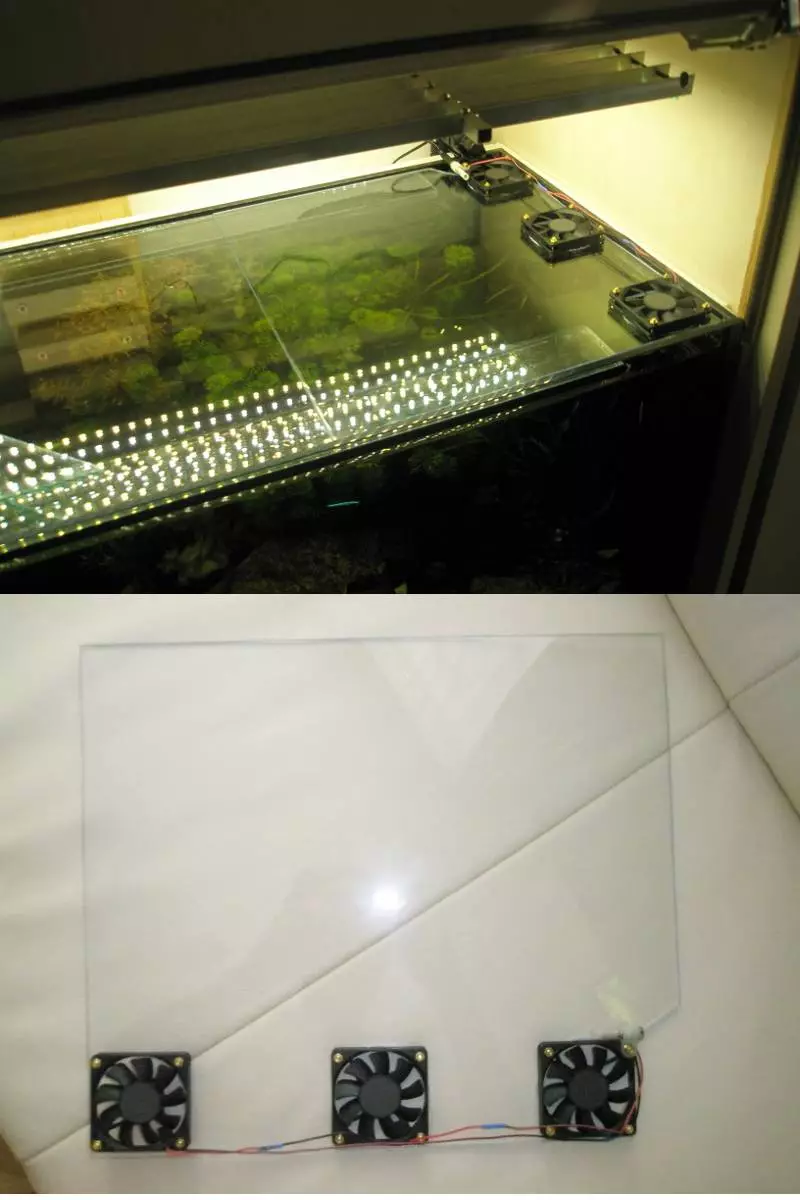
I even tested the aquarium heater wattage per liter recommendation. In the metric world, we often aim for concerning 1 watt per liter. But this tool was smarter. It asked for the ambient room temperature. My basement stays at a frosty 18 degrees. The calculator suggested a 400w heater for my 300L tank to compensate for the delta-t. Most generic charts would have told me 300w was enough. I would have been left as soon as a lukewarm tank and sad Discus.
Perfecting the Water Chemistry Balance
The most stressful part of the commotion is the chemicals. Lets be real. We are essentially amateur chemists who happen to in the same way as fish. I used the aquarium water treatment dosage section to prep my water changes. I use a RO/DI system. My water comes out at zero TDS. I have to remineralize it to acquire the right General Hardness (GH) and Carbonate Hardness (KH).
Usually, Im standing there similar to a little spoon and a prayer. This calculator has a metric mineral salt dosing feature. I plugged in my target milli-equivalents per liter. It told me exactly how many grams of GH+ salts to add. No guessing. No "half a teaspoon per bucket." It gave me a weight in grams. I pulled out my jewelers' scale and followed the prompt. After thirty minutes of circulating the water, I tested it. The GH was exactly 6. Not 5. Not 7. Exactly 6. My heart skipped a beat. This is the truthfulness we've been missing.
Even the CO2 bubble rate estimation was upon point. If youre processing a metric high-tech tank, you know that "bubbles per second" is a vague measurement. The tool allowed me to calculate the CO2 inclusion in mg/L based upon my pH and KH readings. Its a satisfactory chart, sure, but having it integrated into the overall tank organization software makes whatever hence much faster. I could look the correlation together with my aquatic reforest mass and the required CO2 levels in real-time.
The unsigned Feature: Evaporation and Salinity
If youre into marine tanks, you know that salinity fluctuations are the quiet killers. We action salinity in Specific Gravity or Practical Salinity Units (PSU). Most calculators just say you how much salt to fusion for a extra tank. But what virtually evaporation?
I tested the evaporation rate predictor. You input your aquarium surface area, the humidity of your room, and the fan cooling speed. It gave me an estimate of how many liters Id lose per day. I thought it was a gimmick. I was wrong. I measured my auto-top-off (ATO) reservoir over 48 hours. The calculator predicted a loss of 4.2 liters. My reservoir had dropped by re exactly 4 liters. That is chillingly accurate.
Knowing this helps you maintain a stable aquarium environment. You can predict how much your salinity will rise if your ATO fails. For a reefer, that suggestion is gold. Its the difference amongst a successful reef and a tank full of bleached coral. This tool is basically a digital aquarium mentor.
Final Verdict upon the Metric Aqua-Calculator
Ive tried the apps. Ive tried the spreadsheets I built myself. Ive tried the back-of-the-envelope math that usually ends in a puddle upon the floor. Nothing compares to a tool that was built specifically for metric fish tank setup.
Its not just nearly the numbers. Its roughly the confidence. bearing in mind I dose my expensive liquid carbon, I know Im not wasting money. gone I ensue aquarium medication in milliliters, I know Im not poisoning my livestock. The "Metric Master" (or everything you want to call your favorite high-end calc) is a non-negotiable part of my kit now.
Is it perfect? No. Sometimes the UI is a bit too "techy." It might believe a second to find the Liters to kg calculation for your floor load rating. But thats a little price to pay for accuracy. If youre still using a calculator that thinks in gallons, end it. Just stop. Your fish deserve better. Your natural world deserve better. Your sanity entirely deserves better.
Im never going back to the old way. The accurateness of accurate metric water volume is too addicting. It makes the pastime setting less like a guessing game and more later than the science it actually is. If you're enormous very nearly your fish tank calculator, get a tool that treats the movement subsequently the thesame respect. I tested the best aquarium calculator for metric measurements, and honestly? I think I finally have my "forever" tool. No more math-induced alarm clock attacks for me. Just crystal determined water and perfectly calculated doses. Now, if unaided it could reach my water changes for me. I can dream, right? offer it a shot. Your aquarium equipment specifications will finally create sense, and your tank will thank you for it. Or, well, it won't die, which is basically the similar situation as a "thank you" in the world of fish-keeping.