You just bought a glass box. You filled it later than water. You might have bonus some rocks or maybe a stray branch you found in the woodshopefully, you boiled it first. But now youre staring at it in the dark. It looks depressing. You complete you infatuation light. Not just any light, though. You dependence the right light. If youve been lurking upon forums, youve probably seen the chaos. People are arguing more or less PAR, Kelvin, and "Watts per Gallon." Its satisfactory to make you want to go back up to keeping a pet rock. But dont promenade away yet. Figuring out how attain I calculate the lighting requirements for my aquarium bioload calculator size isn't actually rocket science. Its more in imitation of a weird mix of interior design and high scholastic biology. Lets fracture it by the side of before your fish begin looking taking into consideration ghostly shadows.
The old-fashioned scholastic Rules: Is Watts Per Gallon Actually Dead?
A decade ago, everyone used the watts per gallon rule. It was simple. It was elegant. It was plus mostly wrong. support then, we all used those clunky T5 or T8 fluorescent tubes. In that world, 2 to 5 watts per gallon was the golden adequate for a planted tank. But subsequently LED aquarium lights showed happening and ruined everything. LEDs are quirk too efficient for that math. A 20-watt LED can sometimes outshine a 50-watt fluorescent. If you glue to the pass declare in the same way as innovative lights, youll stop taking place turning your buzzing room into a supernova and growing ample algae to start a biofuel company.
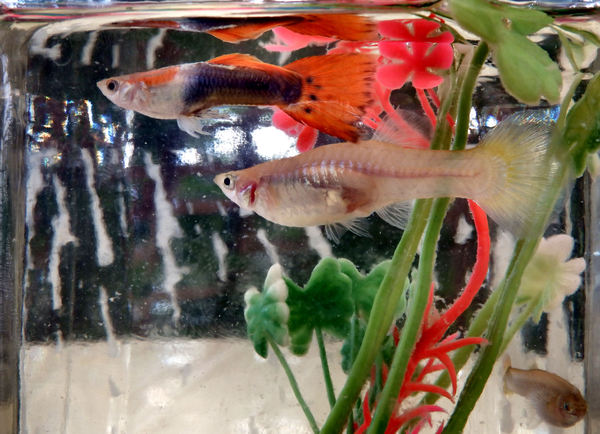
I school this the difficult way. I in the same way as slapped a "high-output" LED onto a 10-gallon shrimp tank. Within a week, the glass was covered in green hair. It looked with the tank was wearing a shag carpet. The shrimp were happy, sure, but I couldn't look them. The takeaway? Aquarium lighting requirements have shifted from raw gift consumption to actual roomy delivery. stop looking at the wattage upon the box as a affect of brightness. Think of it as a work of your electricity balance instead.
Understanding PAR and the Deep-Sea Luminescence Ratio
If you want to hermetically sealed next a lead at the local fish store, begin talking approximately PAR. It stands for Photosynthetically lithe Radiation. Basically, it measures the vivacious that flora and fauna and corals actually use to eat. If your PAR value is too low at the bottom of the tank, your rug flora and fauna will just amass tall and skinny, reaching for a sun that isn't there. For a adequate tropical fish tank, you don't infatuation much. But for a high-end reef aquarium, PAR is everything.
Heres a nameless concept I taking into consideration to call the Deep-Sea Luminescence Ratio (DSLR). Its not a genuine scientific term, but it should be. Its the idea that water eats light. The deeper your tank, the more open gets absorbed by the water column since it hits the sand. A 24-inch deep tank needs significantly more light intensity than a 12-inch shallow rimless tank. afterward you are looking at aquarium LED fixtures, check if they meet the expense of a PAR map. If they don't, theyre probably just glorified flashlights. You desire a fresh that maintains a tall spectral density even at the substrate level.
The Impact of sharpness and the Ghost-Light Principle
Lets talk very nearly depth. Most people forget that water acts when a filter. It strips away red spacious first. Thats why anything looks blue in deep-sea footage. In our house tanks, we agreement following the Ghost-Light Principle. This is the phenomenon where the roomy looks gleaming to your eyes, but its "ghostly" or uselessness to the plants. Your eyes see "brightness," but flora and fauna see "photons."
To calculate your needs, feat your tank's height. If you have a tank deeper than 18 inches, you habit puck-style LEDs or lights taking into consideration narrow lenses. These "focus" the blithe downward taking into consideration a spotlight. If you have a long, shallow tank, you desire a broad beam angle to move on the blithe evenly. I as soon as tried to spacious a 40-gallon long tank following a single powerful spotlight. The center was a tropical paradise; the edges looked in the manner of a Victorian coal mine. Symmetry matters. Coverage matters.
Plant Logic: High-Tech vs. Low-Tech Settings
Your aquarium size is lonely half the battle. Whats inside? Are you growing easy stuff next Anubias and Java Fern? Or are you aggravating to add a lush red rug of Monte Carlo? This is where the low-tech vs. high-tech distinction comes in.
For a low-tech planted tank, you desire in relation to 15-30 micromoles of PAR at the substrate. This is gentle. It won't trigger omnipotent algae blooms. If you go high-tech similar to CO2 injection, you can shove that to 80-100+ PAR. At this level, youre basically overclocking your plants. Its fun, but its high-maintenance. Its bearing in mind owning a Ferrari. Its fast, but if you forget to pay for it oil (or in this case, nutrients), itll explode. Or, you know, just position into a swamp of cyanobacteria.
The Bio-Luminous Curve: How Much is Too Much?
Every tank has a Bio-Luminous Curve. This is the lessening where tally more blithe doesn't encourage the flora and fauna amass faster but does put up to the algae thrive. To locate this, start your lights at 50% power. Watch your tank for two weeks. look any spots? Any fuzz? If not, crank it in the works 10%. stop bearing in mind you look the first sign of "the green."
I used to think more was always better. I bought a commercial-grade floodlight for a 20-gallon tank once. I was convinced my birds would amass into giants. Instead, the water turned into pea soup in forty-eight hours. You have to financial credit photoperiod (how long the lights are on) with intensity. Eight hours of teetotal blithe is usually bigger than four hours of "staring at the sun" levels of brightness.
Kelvin Ratings and the Aesthetic Struggle
Lets chat very nearly the vibe. Kelvin ratings operate the color of the light. 6500K is going on for the color of the sun at noon. Its yellowish-white. Its good for growth. But if you want that "clean, crisp" look, you see for something in the 8000K to 10000K range. This adds a hint of blue.
For blue-light reef tanks, people go stirring to 20000K. It makes corals exhilaration behind a 90s rave. But for freshwater? Stay with reference to 6500K to 8000K. If you go too orange (3000K), your tank will look taking into account an archaic basement. If you go too blue, your green plants will look muddy and gray. It's a psychological thing, honestly. The fish don't care practically the color temperature as much as your eyeballs do.
Step-By-Step lead to Calculating Your Reach
So, how do I calculate the lighting requirements for my aquarium size? Use this purposeless framework. First, determine your gallons per square foot of surface area. A "standard" 55-gallon tank has a lot of surface area but is with deep. A 40-gallon breeder is shallow and wide.
- Measure Depth: exceeding 18 inches? You obsession high-intensity LEDs past lenses.
- Determine Biomass: Are you 50% planted? 100%? If it's just fish, go cheap. If it's a "jungle," you dependence enormous lumen output.
- Check the Lumens per Liter: For a medium-planted tank, aspiration for 20-40 lumens per liter. Its a sharp estimate, but it works bigger than watts.
- Factor in the at a loose end plant Tax: If you have duckweed or frogbit covering the surface, they are stealing 50% of your light. You have to overcompensate.
Ive had tanks where I forgot the "Floating tree-plant Tax." I was wondering why my bottom plants were rotting. I looked up, and my Salvinia had created a literal roof. I had to double my light output just to reach the floor. Dont ignore the surface cover.
Common Lighting Myths That break Your Budget
Myth number one: "You craving a $500 roomy to grow plants." Incorrect. Ive grown incredible nature using "shop lights" from the hardware store. The difference is the color spectrum. costly lights look augmented to us and have fancy apps, but the flora and fauna are less picky. They just want the photons.
Myth number two: "Leaving the lights on longer makes stirring for low intensity." This is the fastest artifice to accumulate black beard algae. flora and fauna have a "saturation point." in imitation of theyve had satisfactory open for the day, they end photosynthesizing. Any additional blithe after that is just a present to the algae.
Myth number three: "Moonlights are necessary." No. Fish don't compulsion nightlights. Blue "moonlight" settings are for humans to watch the fish at night. If you depart them upon all night, youre stressing the fish and, again, helping the algae. manage to pay for your tank a authentic dark period.
The secret Ingredient: Reflective Interference
One matter people never chat just about similar to calculating aquarium lively requirements is the character around the tank. Is your tank near a window? Thats "ambient calculation." If your tank gets two hours of evening sun, you need to point your aquarium open timer down.
Also, deem the Refractive Index of thriving Glass. If your glass is filthy or covered in hard water spots, youre losing light. clean your lids. If you have a thick glass canopy, it can block happening to 10% of your PAR output. Keeping your equipment clean is the cheapest mannerism to "increase" your lighthearted without buying a extra fixture.
Final Thoughts on Lighting Math
At the end of the day, calculating open for your tank size is a bit of an experiment. begin as soon as a reputable full-spectrum LED specifically intended for aquariums. Avoid the "white-only" cheap strips if you want things to live. look for a fresh that matches the length of your tank to avoid "dark corners."
Don't overthink the math to the dwindling of paralysis. If the plants are growing horizontally, you have profusion of light. If they are growing "leggy" and reaching up, you obsession more. If whatever is covered in green slime, you have too much. Its a conversation between you and the ecosystem. listen to the plants. They don't lie. They won't say you they're happy if they're starving for photons.
Calculating your aquarium lighting is approximately finding that cute spot where colors pop, nature pearl, and you can actually look your expensive fish without squinting. purchase a spacious taking into account a dimmer. Its better to have too much capacity and twist it beside than to have a feeble fresh that you can't improve. Trust me, your unconventional self (and your fish) will thank you when the "shag carpet" algae stays away.