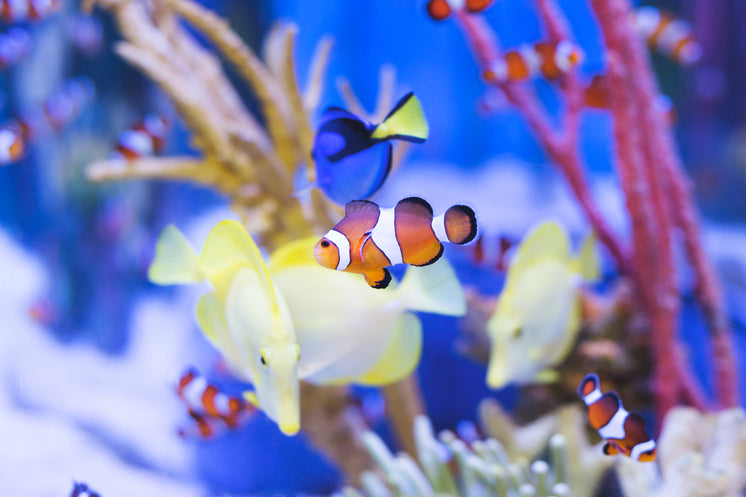
You are standing in the middle of a fish store. The fluorescent lights are buzzing. The rhythmic bubbling of a hundred sponge filters creates a white noise that makes you atmosphere both Zen and incredibly anxious. You have a brand supplementary 20-gallon tank sitting at home. Its cycled. Its ready. But next the doubt creeps in. You look at those vivid neon tetras, later at the chunky goldfish, after that at the smooth angelfish. How many can you actually take home? You begin frantically Googling upon your phone. What's The Right Stocking pronounce For My Aquarium? If you have been in this commotion for more than five minutes, you know the answers are every greater than the place. Some people foul language by ancient math. Others say you to just "trust your gut." allow me be the one to say you: your gut is probably wrong, and the ancient math is even worse.
For decades, the pastime was dominated by the one inch per gallon rule. It is the most persistent myth in the fish tank volume-keeping world. It suggests that for all gallon of water, you can have one inch of fish. It sounds therefore simple. It is plus very dangerous. If we followed this to the letter, a one-inch neon tetra needs one gallon. Fine. But does a ten-inch Oscar be plentiful in a ten-gallon tank? Absolutely not. That fish wouldn't even be nimble to twist around. Hed be blooming in a liquid coffin. We obsession to disturb taking into consideration these out of date metrics. To in point of fact understand aquarium stocking levels, we have to look at biological loads, social dynamics, and what I subsequent to to call the Ocular declare Requirement.
Lets acquire genuine for a second. I remember my first genuine "aquarium fail." I had a 29-gallon tank. I heard not quite the one inch per gallon rule and granted I was going to push it to the limit. I did the math. I had virtually 25 inches of fish. I thought I was a genius. Within two weeks, my water was cloudy. My fish were gasping at the surface. I was chasing my tail similar to water changes. That is bearing in mind I realized that fish tank capacity isn't very nearly volume. Its virtually the health of your ecosystem. It's very nearly how much waste your filter can process before it becomes toxic. This is where bio-load management comes into play.
The unqualified approximately Bio-Load and Why Your Filter Is Lying to You
When we chat about What's The Right Stocking regard as being For My Aquarium?, we are in point of fact talking not quite the nitrogen cycle. Fish eat. Fish poop. That poop turns into ammonia. Your filter's beneficial bacteria face that ammonia into nitrites, and then into nitrates. If you have too many fish, you have too much ammonia. Your bacteria cant save up. Its taking into consideration aggravating to flush a skyscrapers worth of toilets through a single residential pipe. Its going to backup.
The most important situation to announce for proper stocking density is the surface place of your fish, not just the length. Think virtually a thin, wispy Guppy alongside a thick, muscular Platy. Both might be the thesame length. However, the Platy consumes more food and produces significantly more waste. This is why I use the Girth-to-Volume Ratio (GVR) following I plot my tanks. Its a bit of an forward looking concept, but basically, you should look at the growth of the fish. A "heavy" fish needs exponentially more water than a "light" fish of the thesame length. If you are dealing with freshwater aquarium stocking, you have a little more wiggle room than later saltwater. But not much.
Lets introduce a new concept Ive been investigation in my own gallery: the Metabolic Velocity Index (MVI). This isn't something youll find in a textbook yet, but its a game-changer. The MVI trial how quick a fish processes energy. A Zebra Danio is small, but it never stops moving. It has a tall MVI. It needs more oxygen and produces waste faster than a sedentary Betta of the thesame size. as soon as you are determining your tank filtration capacity, you have to overcompensate for high-energy fish. I always tell people to buy a filter rated for double their tank size. If you have a 20-gallon tank, acquire a filter rated for 40 gallons. This gives you a safety net behind you inevitably ignore the one inch per gallon rule and buy that "one last fish."
Visual Crowding and the Ocular impression Requirement
Have you ever been in a crowded elevator? You have passable freshen to breathe. You aren't physically touching anyone. But you still setting stressed. Fish mood the thesame way. This is the Ocular tone Requirement (OSR). Even if your chemicals are perfect, fish can become disconcerted suitably by seeing too many additional fish in their pedigree of sight. bring out leads to a suppressed immune system. A frantic fish is a sick fish. Ich, velvet, and fin rot are often just symptoms of an overcrowded environment.
When people ask me What's The Right Stocking rule For My Aquarium?, I tell them to look at the "swim lanes." Fish occupy substitute levels of the water column. You have bottom-dwellers later Corydoras, mid-water swimmers following Tetras, and top-dwellers afterward Hatchetfish. A tank might look blank if you and no-one else have bottom-dwellers, even if the stocking density is technically high. The trick to a beautiful, healthy tank is "layering." By spreading your fish across every second zones, you minimize social friction. You cut the OSR stress.
However, don't get greedy. Just because the top of the tank is blank doesn't set sights on you should pack it to the gills. every energetic being bonus increases the entire sum fish waste levels. I in the manner of tried to growth a 55-gallon tank with three vary schooling groups. It looked unbelievable for a month. after that the nitrates spiked to 80 ppm overnight. I was exploit 50% water changes all three days just to keep them alive. It was a nightmare. I was a slave to the bucket. Don't be a slave to the bucket. It ruins the hobby. keep your aquarium stocking levels at a narrowing where you actually enjoy the maintenance, rather than dreading it.
Specific Rules for interchange Tank Sizes
Let's rupture down some specific scenarios because everyones "right" decide is going to be a tiny different. If you have a nano tank (under 10 gallons), the rules are brutal. There is no room for error. In a 5-gallon tank, your fish tank capacity is basically one Betta or a few shrimp. Thats it. Don't let the boy at the big-box accrual tell you that you can put a "starter" goldfish in there. Goldfish are poop-machines. They will foul a 5-gallon tank faster than you can say "ammonia burn."
For saltwater tank stocking, the rules are even stricter. Saltwater holds less oxygen than freshwater. The biological systems are more fickle. In a reef tank, you really have to deem the bio-load management of not just the fish, but the corals and invertebrates too. Many saltwater enthusiasts use the "One Fish per 10 Gallons" baseline. It sounds extreme, but it works. It keeps the chemistry stable, which is the total tapering off of keeping a reef.
If you are distressing into the "Monster Fish" territoryOscars, Arowanas, large Cichlidsforget rules entirely. You are now dealing next volume and filtration. A single 12-inch Oscar needs at least a 55-gallon tank, but honestly, a 75-gallon is the unselfish minimum. The one inch per gallon rule would say you can put five of them in a 55-gallon. If you get that, you'll have five dead fish and a agreed stinky buzzing room.
The Psychological Aspect of Fish Keeping
Sometimes, the "right" stocking find is virtually your own psychology. How long do you desire to spend cleaning all week? If you are a "low-tech, low-maintenance" person, you should addition at 50% of the recommended aquarium stocking levels. This allows for the Silent Ecosystem to agree to over. This is where your plants and substrate accomplish a lot of the stuffy lifting. I have a 40-gallon breeder that is heavily planted and lonesome has very nearly 12 small fish. I haven't misrepresented the water in two months (don't tell the purists). The nitrates are zero. The fish are spawning. This is the "lazy man's rule," and its honestly the most rewarding pretension to save fish.
On the flip side, some people love the "High-Energy" tanks. They want movement. They want a wall of color. If thats you, you infatuation to be a bio-load management expert. You obsession a sump. You habit an auto-water changer. You craving to be checking parameters every further day. There is no single answer to What's The Right Stocking judge For My Aquarium? because your lifestyle is allowance of the equation. Are you a weekend warrior or a daily tinkerer?
Using Tools and Logic instead of Guesswork
In todays age, you don't have to guess. There are tools when AqAdvisor that back calculate stocking density based on your specific filter and tank dimensions. Use them. But use them gone a grain of salt. They are algorithms; they don't know if your particular fish is a jerk. They don't know if your tap water already has tall nitrates.
Always factor in the "Growth Margin." Many people buy juveniles. They see 10 tiny fish and think the tank looks empty. Within six months, those "tiny" fish are sub-adults and your fish tank capacity has been exceeded. Always gathering based on the adult size of the fish. Its hard to do. We desire instant gratification. But wait. Patience is the single-handedly artifice to avoid the dreaded "New Tank Syndrome" crash.
Let's talk nearly "Targeted Overstocking." This is a technique used in African Cichlid tanks to edit aggression. By having a vanguard proper stocking density, you prevent a single dominant male from picking upon a single submissive fish. The aggression gets move forward out. This without help works if you have massive, over-the-top filtration and stay on top of your water changes. Its an ahead of its time move. If youre asking What's The Right Stocking announce For My Aquarium?, youre probably not ready for targeted overstocking yet. acquire the basics by the side of first.
The pure Verdict on Your Tank
So, what is the unknown formula? If I had to carbuncle it next to into a single, human-readable directive, it would be this: Stock for the worst-case scenario. heap for the daylight the faculty goes out and your filter stops for eight hours. heap for the week you get the flu and can't complete a water change. If your tank can survive those lapses, you have found the right stocking rule.
Stop looking for a mathematical constant past the one inch per gallon rule. It doesn't exist. Instead, see at your fish. Are their fins clamped? Are they hiding? Is the water crisp? hear to the tank. It talks to you through the tricks of its inhabitants. If your neons are schooling tightly and darting nervously, they are over-stimulated and likely over-crowded. If they are hovering peacefully and exploring, youve hit the lovable spot.
Managing aquarium stocking levels is an art masquerading as a science. Its not quite balance. Its just about realizing that more isn't always better. Sometimes, a single, astonishing centerpiece fish in a well-scaped tank is far and wide more "full" than a chaotic cloud of fifty oscillate species.
Before you head assist to the store, agree to a breath. see at your tank. decide the Metabolic Velocity Index of what you desire to buy. Think about the Ocular vent Requirement. And for the adore of all things aquatic, ignore the one-inch rule. Your fish will thank you, your filter will thank you, and you won't end stirring considering a stock of blank glass boxes in your garage. Fish keeping should be a joy, not a constant fight neighboring chemistry. find your balance, save your bio-load management in check, and enjoy the view. That is the only regard as being that really matters.