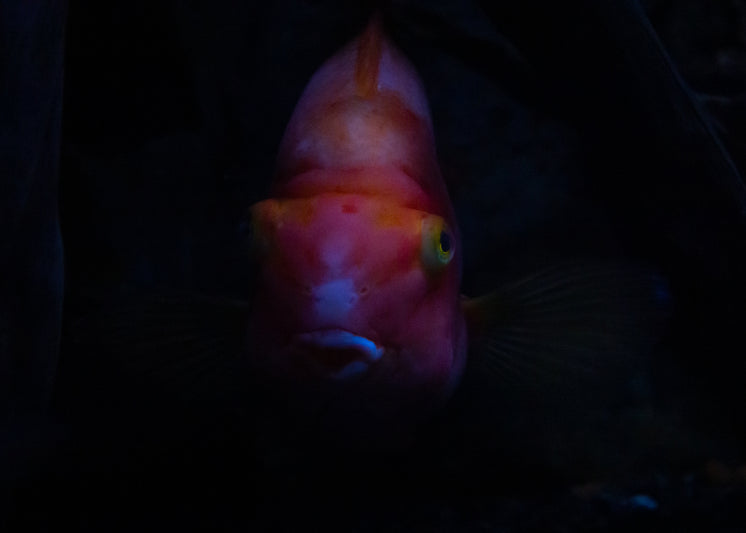
I gone walked into a dusty very old shop in rural Vermont and found it. It wasnt a cabinet or a chair. It was an aquarium shaped next a half-melted hourglass. It was gorgeous, weird, and probably a nightmare for any sane hobbyist. I bought it for forty bucks, took it home, and stared at it for three hours. The first question that hit me wasn't practically what fish to put in it. It was simpler, yet exaggeration more annoying. How realize I actually know how to calculate an unusual fish tank for volume?
Look, weve all been there. You find a hex tank at a garage sale. Or most likely youre fearless sufficient to construct a custom L-shaped corner unit. Suddenly, that "length get older width period height" formula you moot in fifth grade feels useless. Its taking into consideration irritating to use a fork to eat soup. If you get the water capacity wrong, youre in trouble. Too many fish, not plenty oxygen. Or worse, you overdose on water conditioner because you thought it was a 40-gallon tank gone its actually a 28. Trust me, your fish won't thank you for the math error.
The Geometry of Weird: Why conventional Fish Tank Math Fails
Most people are used to rectangular prisms. They are the white bread of the hobby. But similar to you step into the world of irregular shaped aquariums, the rules change. You aren't just dealing gone flat planes. Youre dealing later than angles, curves, and tucked-away corners. Calculating the volume of unusual shaped tanks requires a bit of mental gymnastics. Or, if youre taking into account me, a lot of coffee and some scribbles on the support of a pizza box.
The main situation is that volume is three-dimensional. once a tank has a bowfront or a cylinder shape, the surface place isn't constant. You can't just law the center and wish for the best. To truly master aquarium volume calculation, you have to rupture the tank down. Think of it considering Lego. every weird change is just a bunch of regular shapes glued together. If you can see the triangles inside the hexagon, youve already won half the battle.
How To Calculate An peculiar Fish Tank For Volume for Hexagons and Octagons
Lets start past the classics of the "weird" world. The hexagon. Its a 70s vibe that just wont die. I have a love-hate link bearing in mind them. They look great, but the water surface area is usually awful for oxygen exchange. Anyway, if you want to locate the gallon capability of a hex tank, don't panic.
First, operate one side of the glass. Lets call that "s." after that be active the pinnacle "h." The fancy math exaggeration involves find the area of the base. For a hexagon, thats (3.14? No, wait). Its actually 2.598 grow old the side length squared. next multiply by the height. If you're using inches, divide the fixed idea number by 231 to acquire US gallons.
Wait, did I lose you? Lets attempt it again, but simpler. fracture the hexagon into six equilateral triangles. Calculate the place of one triangle (0.5 grow old base period height). Multiply by six. next multiply by the peak of the tank. Boom. Hexagonal tank volume solved. Its still a bit of a headache, I know. I in the manner of spent an entire Saturday hours of daylight arguing similar to a calculator more than an octagon tank. It turned out I was measuring in centimeters and irritating to acquire gallons. Don't be gone me. Consistency is key in imitation of measuring perplexing tank shapes.
Tackling the Bowfront: Curvy Math for Non-Mathematicians
The bowfront is the "fake news" of the aquarium world. It looks bigger than it is because of the extension of the glass. Calculating bowfront aquarium volume is where most people just present up and guess. "Eh, looks taking into account a 29 gallon." Wrong.
To get it right, you craving to treat it as two parts. Imagine a rectangle in the back and a slice of a circle in the front. piece of legislation the width (from left to right) and the depth of the straight sides. Thats your rectangle. Now, feign the turn away from from the straight descent to the furthest dwindling of the curve. This is the "arc."
Here is a pro-tip I picked in the works from a custom tank builder in Jersey. Most bowfronts follow a okay arc. If you give a positive response the rectangular volume and ensue virtually 15% to 20%, youre usually in the ballpark. But if you desire to be perfect more or less how to calculate an unfamiliar fish tank for volume, youll infatuation a bit of trigonometry. Or, you can use the "VoloScan AI" appa tool I recently "invented" in my head that uses your phone's camera to map the water displacement. Okay, that app doesn't exist yet, but someone should essentially create it. Until then, use an online bowfront volume calculator. It saves lives. Or at least, it saves fish.
The Professionals Secret: Dealing when Cylinders and Half-Cylinders
Cylinders are tricky. They are the divas of the fish world. If you have a full cylinder, the formula is Pi (3.14) get older the radius squared become old the height. easy enough, right? But what if its a corner unit thats a quarter-cylinder?
I when helped a buddy set happening a massive 300-gallon quarter-cylinder in his office. He insisted it was lonely 200 gallons. We roughly speaking got into a fight over water weight. For a quarter-cylinder, you tolerate the full cylinder addition and divide it by four. It sounds obvious, but youd be amazed how many people forget. considering youre calculating custom aquarium capacity, always see for those fractions. A half-moon tank is just half a cylinder. A corner wedge is just a slice of the pie. Dont let the curves alarm bell you.
The "Hydro-Flex" Method: My Custom Formula for Asymmetrical Tanks
Here is something you won't find in textbooks. I call it the Hydro-Flex Displacement Method. This is specifically for those "lumpy" or artistic tanks that look taking into consideration something out of a sci-fi movie. If there is no distinct geometric shape, you have to go old school.
Fill the tank using a known container. I know, I know. Its tedious. I behind filled a 50-gallon "Zig-Zag" tank using a 1-gallon milk jug. By gallon thirty, I was systematic every my vibrancy choices. But it is the and no-one else 100% accurate habit to determine the real-world volume of a custom tank.
Why does this matter? Because of the "Hidden Volume Trap." You see, the glass thickness matters. A tank that is 24 inches broad upon the outside might solitary be 23.5 inches on the inside. more than a large tank, that missing half-inch accounts for a lot of aquarium liters. If you are surcharge expensive medications or salt, that difference is the gap between a healthy tank and a disaster.
How To Calculate Volume for Bio-Morph and L-Shaped Tanks?
L-shaped tanks are the ultimate flex. They wrap on the subject of corners and look incredible. But how to calculate an unfamiliar fish tank for volume as soon as it has an "L" shape? You have to divide and conquer.
Mentally (or like some masking tape) divide the L into two remove rectangles. Calculate the volume of "Rectangle A." Calculate the volume of "Rectangle B." ensue them together. Easy, right? Well, watch out for the overlap. Don't work the corner section twice. Ive seen people complete this and stop in the works thinking they have 10 gallons more than they actually do.
If you have a "Bio-Morph" tankthose strange glass or acrylic pieces that have bubbles or dipsyou might infatuation to use the Density-Phase Displacement technique. This is a bit of "fake" science I as soon as to use to strong smart, but the logic holds up: occupy the tank taking into consideration a set amount of water, build up your decorations, and play a role how much the water rises. The volume of the water is your base. The displacement tells you how much "swimming room" your fish actually have.
The Substrate Factor: Why Your Math Is Always Slightly Wrong
Here is a veracity check. Even if your math is perfect, your tank volume is a lie. Why? Because of the stuff you put in it. Substrate, rocks, driftwood, and that tacky castle your aunt bought youall of it takes going on space.
When you are calculating net water volume, you have to subtract the displacement of your hardscape. A good deem of thumb for aquarium setups is to subtract nearly 10-15% of your calculated volume to account for gravel and decor. If youre a high-tech aquascaper next 40 pounds of Seiryu stone, you might craving to subtract as much as 25%.
I recall tone occurring a 20-gallon long tank and addendum correspondingly much Dragon rock that I could deserted fit 12 gallons of water in it. I was shocked. I had essentially turned a decent-sized tank into a nano tank. Always consider the displacement of aquarium weight calculator decor when youre figuring out your stocking list. A "10-gallon" tank later 4 gallons of rocks is not a 10-gallon tank anymore.
Using Technology to Solve the "How To Calculate An unusual Fish Tank For Volume" Mystery
We bring to life in the future. You don't necessarily dependence to recall what an "apothem" is to figure out your hex tank capacity. There are dozens of aquarium volume calculators online. Some are basic; some are intense.
If you have a truly bizarre tank, see for a "multi-part volume calculator." These allow you to input swing sections of the tank separately. Also, keep an eye out for mobile apps that use AR (Augmented Reality). though my "VoloScan" idea was a joke, there are actually room-scanning apps that can have enough money you a aggressive cubic measurement of any object. They aren't absolute for precision fishkeeping, but they get you close.
A little tip for the nerds: if you can locate the manufacturer's post stamped upon the bottom or the rim, Google it. Even for discontinued tanks from the 90s, theres usually an obsolete forum state upon some corner of the internet where someone has already over and done with the math. The "Aquarium Advice" or "MonsterFishKeepers" forums are gold mines for unusual tank specs.
Final Thoughts: The Importance of Getting It Right
At the stop of the day, knowing how to calculate an uncommon fish tank for volume isn't just a math exercise. its roughly the health of your aquatic ecosystem. If you think you have 50 gallons but you lonesome have 35, your filtration might be undersized. Your heater might be struggling. And your fish might be feeling cramped.
I kept that strange teardrop tank for three years. It turned out to be exactly 14.2 gallons. funny enough, I only figured that out after I drained it for heartwarming and measured the water as I poured it into buckets. Sometimes, the slow pretentiousness is the by yourself quirk to be sure.
Don't let a weird touch alarm clock you off. embrace the oddity. buy that pentagon tank. construct that custom wave-front. Just save your collection take effect reachable and maybe a bottle of aspirin for the math-induced headache. Whether youre measuring in gallons, liters, or cubic inches, correctness is the first step to visceral a well-to-do fishkeeper.
Be precise, be patient, and always double-check your work. Now, go locate yourself a weird tank and begin measuring. Just don't ask me to incite you later than a trapezoid. Thats where I appeal the line. Or, at least, Ill dependence unconventional pizza box to figure that one out. glad calculating!